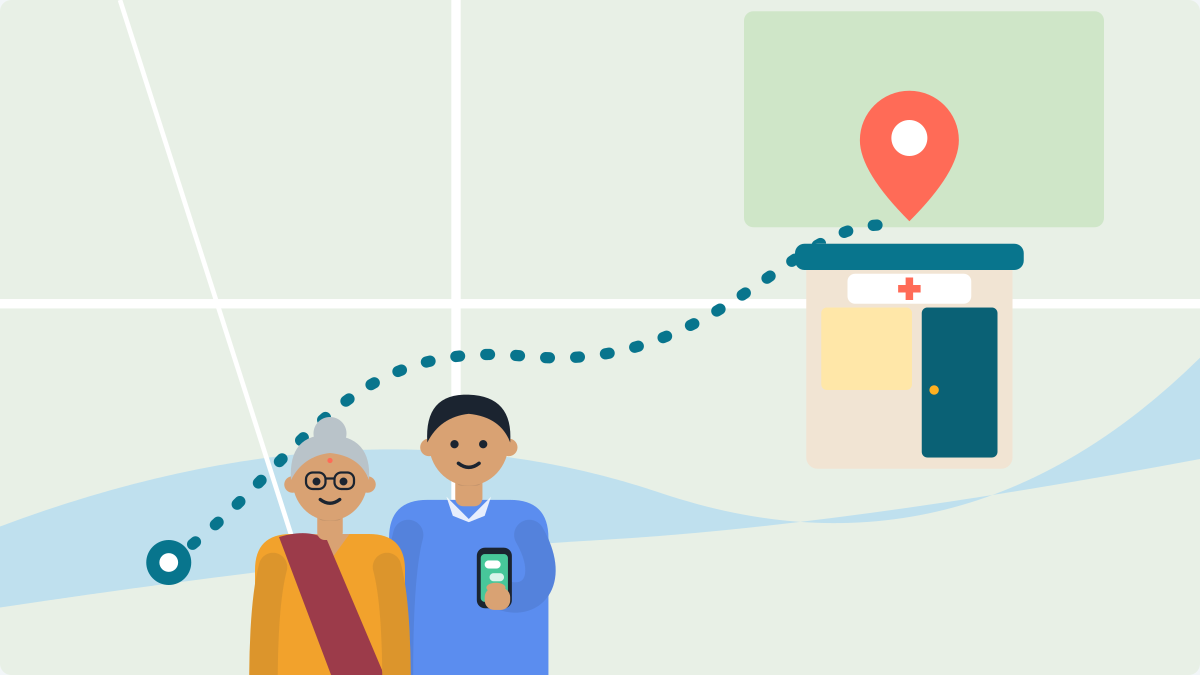
A physiotherapist's website needs six things. Your name and training, what you treat, how a session runs, timings, place, and booking. Put those on one page, and people can book you without a single phone call.
The same page works for a dietitian or a counsellor. Here is what goes on it.
What do people look for on your page?
Before they book, people want quick answers:
- When are you open? The days and hours, and whether you see people on Sunday.
- Where are you? Your address and a map.
- How do they reach you? One button to message or call.
- Can they trust you? Your training, written clearly.
Put these at the top, where people see them at once. Everything else can come below.
How should you write your name and qualification?
Write your name the way you use it, with your profession and degree after it. For example, "Physiotherapist, BPT".
Your profession has a legal home. The National Commission for Allied and Healthcare Professions Act, 2021 lists ten categories of professionals:
| Category in the Act | Who it covers |
|---|---|
| Physiotherapy professional | Physiotherapists. The Act's note says they can practise on their own or in a team, with at least a bachelor's degree. |
| Nutrition science professional | Dietitians and nutritionists |
| Community care, behavioural health sciences and other professionals | Includes psychologists (except clinical psychologists covered by the Rehabilitation Council of India) and counsellors |
Add your registration number if your body gives you one.
What do you treat, and how does a session run?
List what you help with, in the words people use:
- A physiotherapist: back pain, stiff joints, getting moving after an injury or surgery.
- A dietitian: meal plans for weight, diabetes or pregnancy.
- A counsellor: stress, worry, or a hard time at home or work.
Then say how a session runs. Say how long it takes, what to wear or bring, and whether a family member can come along.
Say clearly that you do not give medicines. People then know what to expect.
How do people book, pay and find you?
- Book. One "Ask for a visit" button. The person picks a time and sends it.
- Pay. Say how they pay you: UPI, or at your place. Say when they pay.
- Cancel. Write your rule for cancelling and refunds in one line.
- Find. A "Get directions" button that opens Google Maps to your door.
Can you see people online?
Yes. A dietitian can review a food diary on a video call. A physiotherapist can watch an exercise and correct it. A counsellor can talk on a call.
Pick one tool and tell people which one you use. It can be a video room, a WhatsApp call, a phone call, or a Zoom or Google Meet link.
Questions doctors ask
How should a physiotherapist's name appear on the page?
Write your name the way you use it, with your profession and degree after it, for example "Physiotherapist, BPT" or "Dietitian, MSc Nutrition". VisiDx never adds "Dr" for you. Add your registration number if your own body gives you one.
Can a physiotherapist or dietitian give prescriptions on the page?
No. A physiotherapist, dietitian or counsellor does not prescribe medicines. After a session, write "Notes and advice" with no medicines. Say clearly on your page that you do not give medicines, so people know what to expect.
Which professions does the 2021 Act list?
The National Commission for Allied and Healthcare Professions Act, 2021 lists ten categories. Physiotherapy has its own category. Nutrition science, which covers dietitians and nutritionists, has its own. Counsellors fall in the community care and behavioural health group.
How do people pay a physiotherapist who uses a booking page?
They pay you directly, by UPI or at your place. VisiDx never holds the money. Write when they pay, and your rule for cancelling and refunds, in one line. You set your own payment rules.
What happens when someone books a session?
They pick a time and send you a message. WhatsApp opens with their message, and you confirm the time there. You can also offer online sessions on a video room, a WhatsApp call, a phone call, or a Zoom or Google Meet link.
A booking page made for you
VisiDx is open to physiotherapists, dietitians, counsellors and other health professionals who are not doctors.
- No "Dr" added. At sign-up, you say you are not a registered doctor. Your name shows as you type it.
- Registration is optional, and labelled for your own body.
- Proof, if you want. You can send your degree, diploma or registration certificate. It is optional, and we keep it on file.
- No prescriptions. After a session you write "Notes and advice", with no medicines.
- Live in 60 seconds after a WhatsApp code.
- Everything people need. What you treat and your timings for each place. "Ask for a visit", "WhatsApp the clinic", "Call the clinic" and "Get directions". A share button, QR codes and an A5 desk poster.
- Your money, straight to you. People pay you by UPI or at your place. VisiDx never holds the money. You set your own payment, cancellation and refund rules.
- Online sessions with the tool you pick. Our video room, a WhatsApp call, a phone call, or a Zoom or Meet link.
When someone books, WhatsApp opens with their message, and you confirm there.
Ready for a page people can book? Set up my digital clinic. Your page goes live in 60 seconds.
Related guides
- Do doctors need a website?
- What your clinic website should say
- How to add your clinic on Google Maps
- Is a website enough, or do you need a Google profile too?
VisiDx Team
Built by a doctor, for doctors.
Not affiliated with Google, OpenAI, Anthropic, Perplexity, Microsoft, Meta or YouTube.